
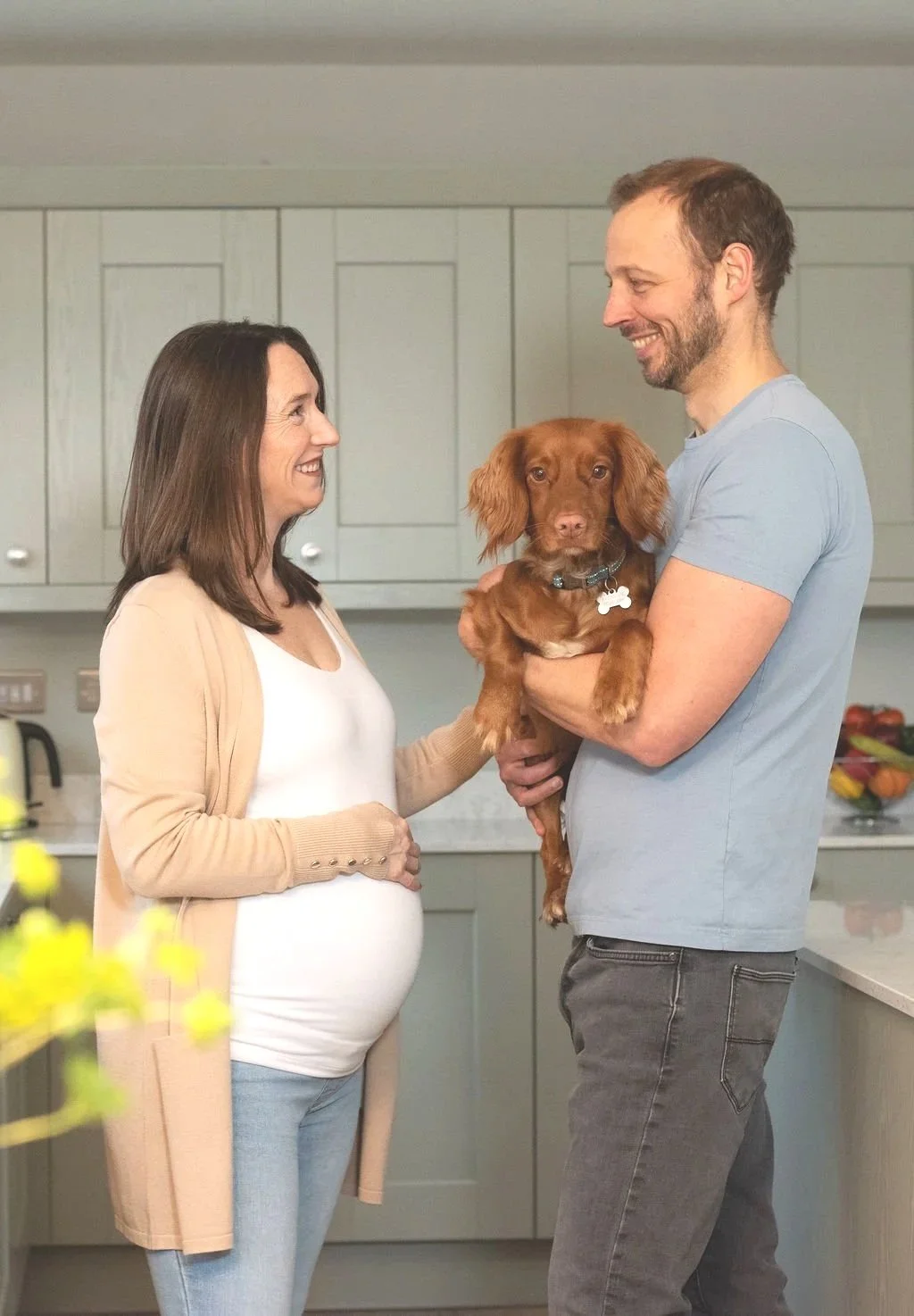
I met my husband when I was 38. After years of building a life I loved, I’d finally found the person I wanted to share it with. When we started trying for a baby at 39, we were hopeful. We were fit and healthy — even competing in triathlons together. As a nutritionist, I felt we were doing everything “right.”
We assumed it would happen quickly. It didn’t.
After six months of trying, we went to our GPs. The tests showed slightly low sperm morphology, but everything else looked normal. Instead of answers, we were given the label “unexplained infertility” and quickly referred for IVF.
At the time, we trusted the process and believed this was the solution.
My Story
The IVF Reality
Our first IVF cycle failed, with minimal binding between the eggs and sperm and no viable embryos were created.
The second round brought a glimmer of hope with nine eggs fertilised via ICSI. We allowed ourselves to feel cautiously optimistic. But sadly PGT-A testing revealed that none of our embryos were genetically normal.
When our fertility clinic told us we had a 1–3% chance of conceiving and suggested stopping treatment, it was devastating. The process had already taken a huge emotional toll, and we felt completely lost.
But I’m not someone who gives up easily. Deep down, I couldn’t shake the feeling that we hadn’t yet uncovered the full picture.
My functional medicine training had taught me to look for root causes, to investigate when things don't make sense.
I'd built my entire practice on the belief that "unexplained" symptoms usually do have an explanation, you just have to dig deeper to find them.
So why wasn't I applying that same principle to my own fertility?
I began training with the Fertility Nutrition Centre to specialise in fertility nutrition, while we explored the underlying reasons for our so-called “unexplained infertility”. Through detailed functional testing, we identified a number of issues: inflammatory bacteria affecting sperm health, nutrient deficiencies, and signs of adrenal dysfunction from the accumulated stress of IVF.
We completely overhauled our approach, refining our diet specifically for fertility nutrition and adding targeted supplements. I also swapped high-intensity training for gentler, more restorative exercise – yoga, social runs, and strength training.
The Turning Point
First came the moment of realisation
During my fertility course, I learned that endometriosis could be asymptomatic. Surely, I thought, if something was wrong, the many scans I’d had would have revealed something?
But I requested my medical notes anyway. And there it was, a reference to free fluid in the Pouch of Douglas on one of my scan reports. A possible indicator of endometriosis that no one had thought to investigate further or mention to me.
Given that we'd never been pregnant, this felt like it could be the missing piece of the puzzle. A private transvaginal ultrasound confirmed it: superficial peritoneal endometriosis.
I immediately arranged surgery to remove it and adopted an autoimmune-friendly diet to reduce inflammation. Within weeks my body started responding. My luteal phase lengthened and my periods were noticeably lighter and healthier.
Then the moment everything changed
Three months later, I took a pregnancy test, and it was positive!
At first, we could hardly believe it. After over two years of trying, two failed IVF cycles and a prognosis of “virtually no chance,” we had conceived naturally.
Subsequent scans confirmed a healthy pregnancy, and as I write this, I'm expecting our first child in April 2026, at what the medical establishment calls the "advanced maternal age" of 42.
I prefer to think of it as the age of perseverance, investigation, and finally, joy.
Why I Do This Work
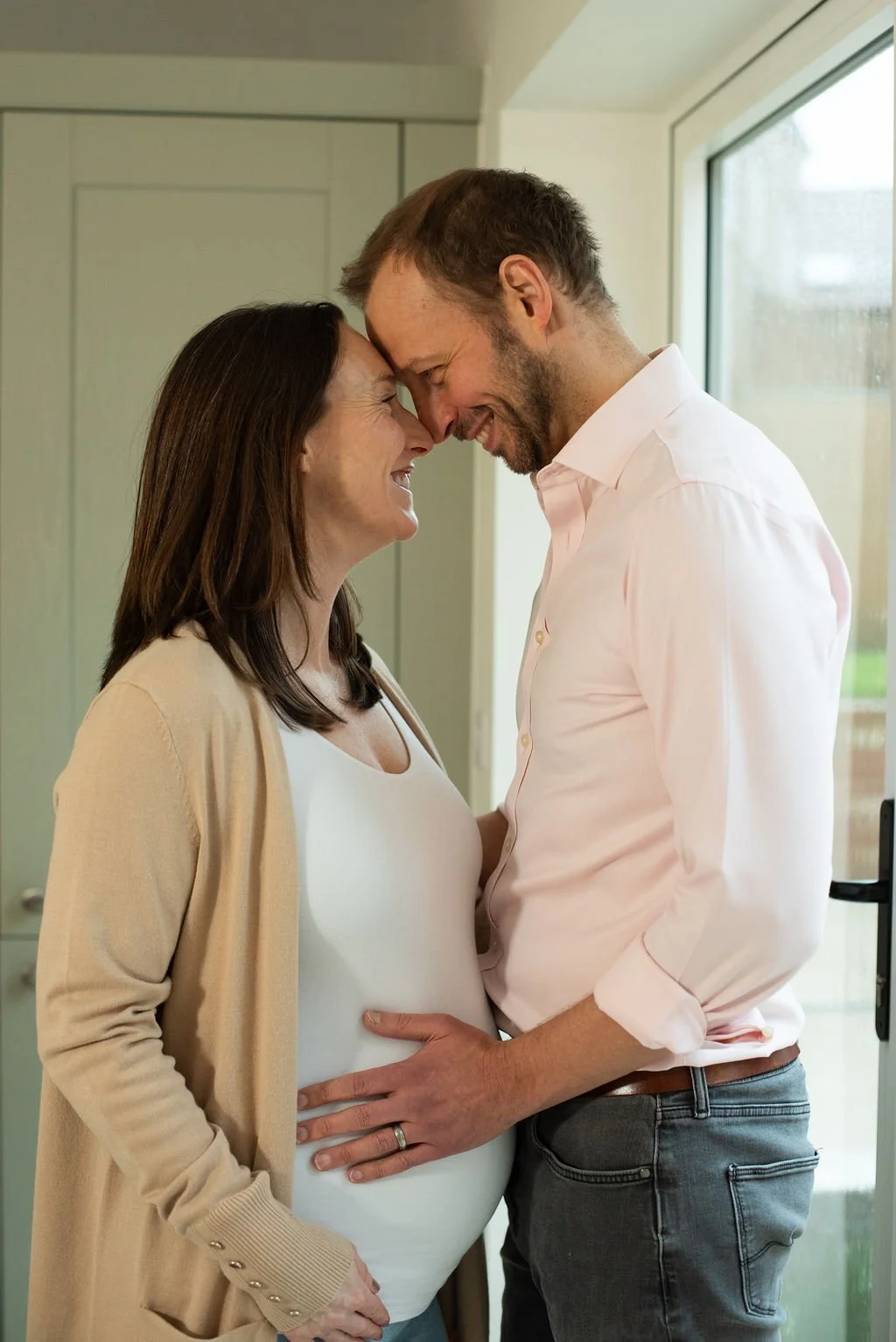
My fertility journey fundamentally changed me, and it clarified my purpose.
I don't want other couples to waste precious time the way we did, or to feel dismissed or hopeless. I don't want them to accept "unexplained" when there are almost always answers to be found.
IVF is not a one-size-fits-all solution and it cannot change the quality of the eggs and sperm you're starting with. Looking back, I feel we lost valuable time pursuing IVF before first addressing our underlying health. If we'd investigated first, we might have conceived naturally much sooner and saved ourselves the emotional and physical trauma of failed cycles.
I'm especially passionate about supporting older women who are told their age is the main barrier to conception. Yes, age matters, but it's not even close to the whole story.
There are so many evidence-based ways to improve your fertility after 40, enhance egg quality, and give yourself a real chance of conceiving.
And men are chronically overlooked. Around 50% of all fertility challenges involve a male factor, yet so many men with suboptimal sperm results are told nothing needs to be done. Yes, sperm health can be bypassed with ICSI. But sperm quality really matters – for conception, and for the long-term health of the baby you're trying to create.
In most cases, infertility isn't one big problem. It's a combination of subtle issues that, individually, might seem minor but together create a significant barrier. The good news, and the hope I hold onto and want to share with you, is that many of these factors can be optimised through nutrition, lifestyle changes, and targeted interventions.
You can shift the odds in your favour. I'm living proof of that.
My Background
My Qualifications
I'm a BANT-registered Nutritional Therapist and Functional Medicine Practitioner. I hold a BSc in Biomedical Sciences from the University of Sheffield and a Postgraduate Diploma in Nutrition Science and Practice from London South Bank University. I subsequently undertook an additional year of advanced training with the Fertility Nutrition Centre to specialise in fertility nutrition.
Before retraining as a nutritionist, I worked in accountancy. My analytical, detail-oriented mindset — the instinct to question, investigate and find what others miss — underpins how I work with my clients today to uncover the root causes of their fertility challenges.
My Perseverance
When I was growing up, my father was diagnosed with an autoimmune condition and given a bleak prognosis. But he refused to accept it, and through diet and lifestyle changes, he put his condition into remission. I watched him prove the experts wrong by taking control of his own health.
That lesson stayed with me and shaped how I think about health, resilience and what's possible when you question assumptions and explore alternative approaches to conventional medicine.
That mindset carried me through two and a half years of trying to conceive. Through the disappointments, the failed cycles and the moments when giving up would have been easier, I held onto the drive to keep asking questions, to keep advocating for myself and to keep believing that there had to be a reason, and that if we could find it, we could address it.
That perseverance is what allowed my husband and me to finally have our baby.
And now, I want to offer that same hope to you.
If you're reading this and you're struggling,
if you've been told you have "unexplained infertility",
or if you've been given devastating odds, please know that your story isn't over.
There is almost always more to uncover, more that can be done and more reasons to hold onto your belief.
Even when the odds seem impossible, the path feels uncertain, and you feel like giving up, don't.
Keep asking questions, keep searching for answers and keep fighting for the family you deserve.
Because you deserve more than "unexplained". You deserve answers, support, and hope.
And I'm here to help you.